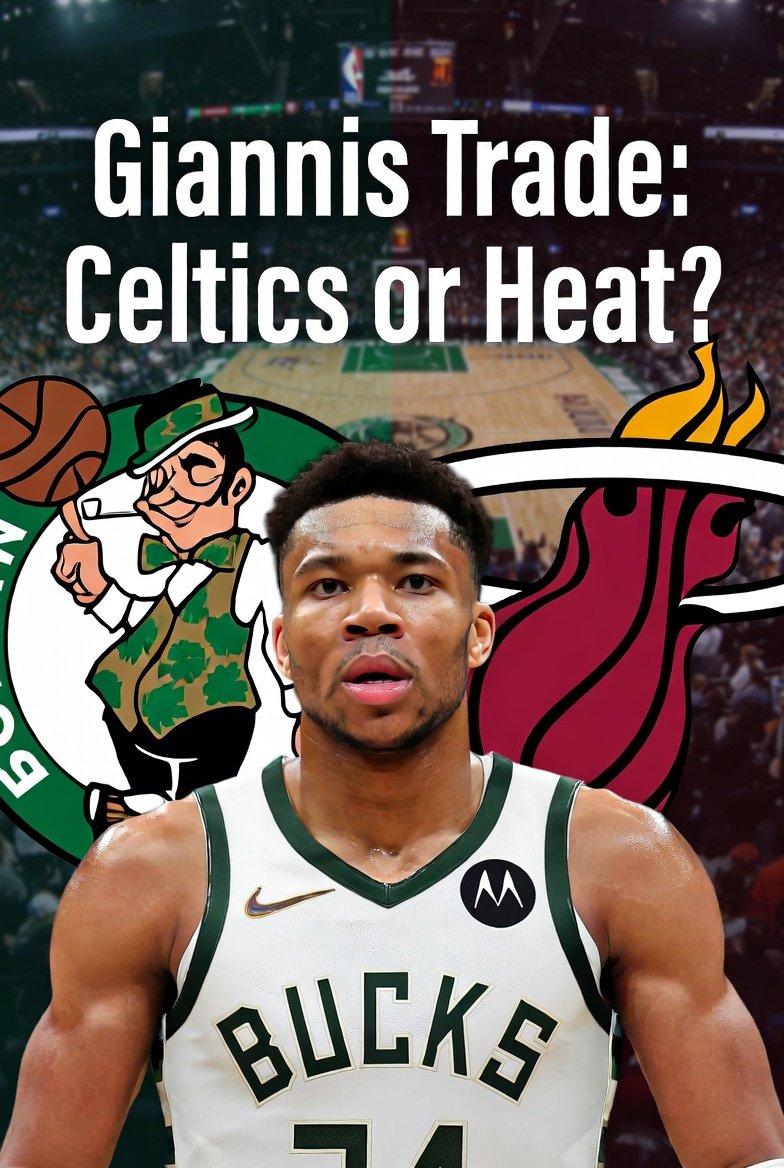
Giannis Antetokounmpo Traded To the Celtics or Heat Tomorrow?
The NBA rumor mill is at a fever pitch. According to ESPN’s Brian Windhorst on Get Up, the Boston Celtics and Miami Heat have emerged as the clear finalists to land Giannis Antetokounmpo in a trade from the Milwaukee Bucks. Windhorst stated there is “a good chance” a deal gets done within the next 24 hours, with the Bucks intent on resolving Giannis’s future around the 2026 NBA Draft.
Giannis, who turns 32 in December, is under contract for one more season at approximately $58.5 million (with a $62.8 million player option for 2027-28). After a 2025-26 season limited to just 36 games by recurring calf strains, a knee hyperextension/bone bruise, ankle issues, and other ailments, the two-time MVP and former champion is widely expected to be moved. The Bucks finished with a poor record (~32-50) and missed the playoffs.
Here’s a breakdown of what a move to either Boston or Miami would mean for the organizations, the Eastern Conference balance of power, Giannis’s durability concerns, and realistic Finals odds.
If Giannis Antetokounmpo Goes to the Miami Heat
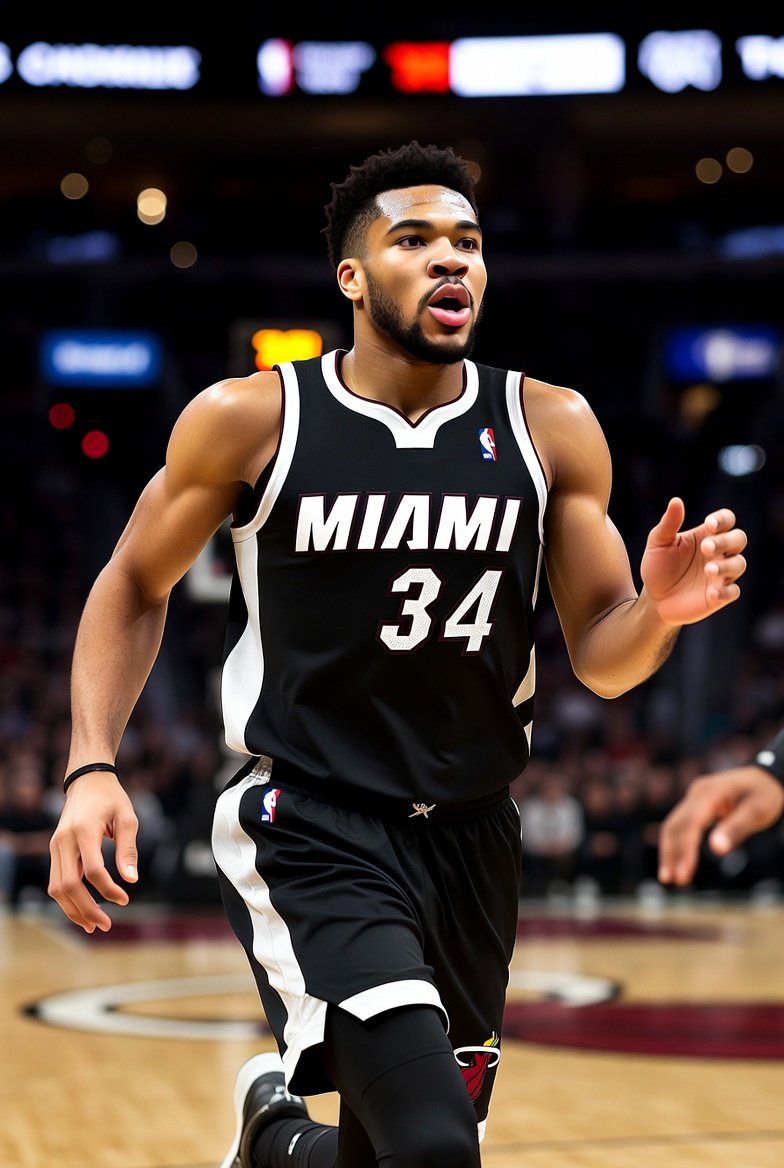
The Heat have been the most aggressive suitor for months. Reports indicate Giannis has expressed a strong preference for Miami, and the Bucks have engaged in extensive talks involving Tyler Herro, Kel’el Ware, Jaime Jaquez Jr., draft capital (including the No. 13 pick), and possibly additional pieces or third-team facilitation.
Organizational Impact:
- Instant star power and culture fit: Erik Spoelstra’s system thrives on versatile, high-motor two-way players. Giannis’s rim-running, defense, and transition dominance would pair beautifully with Bam Adebayo’s elite two-way versatility in the frontcourt. The Heat’s developmental culture (see Jaquez, Ware, and others) could help maximize role players around him.
- Roster construction challenge: Sending out Herro (a proven All-Star scorer) and young assets would thin the depth, but Miami has a history of squeezing maximum value from role players. Giannis would immediately become the clear alpha and best player.
- Financials and timeline: Adding a ~$58M+ superstar on a short-term deal creates luxury tax and apron complications, but it’s a win-now move for a franchise that has repeatedly punched above its weight.
On the Court: The Heat were roughly a play-in team (~43-39 range) in 2025-26. Adding Giannis transforms them into a top-4 East team overnight, likely competing with the Pistons, Celtics, Knicks, and Cavaliers for the top seeds.
If Giannis Antetokounmpo Goes to the Boston Celtics
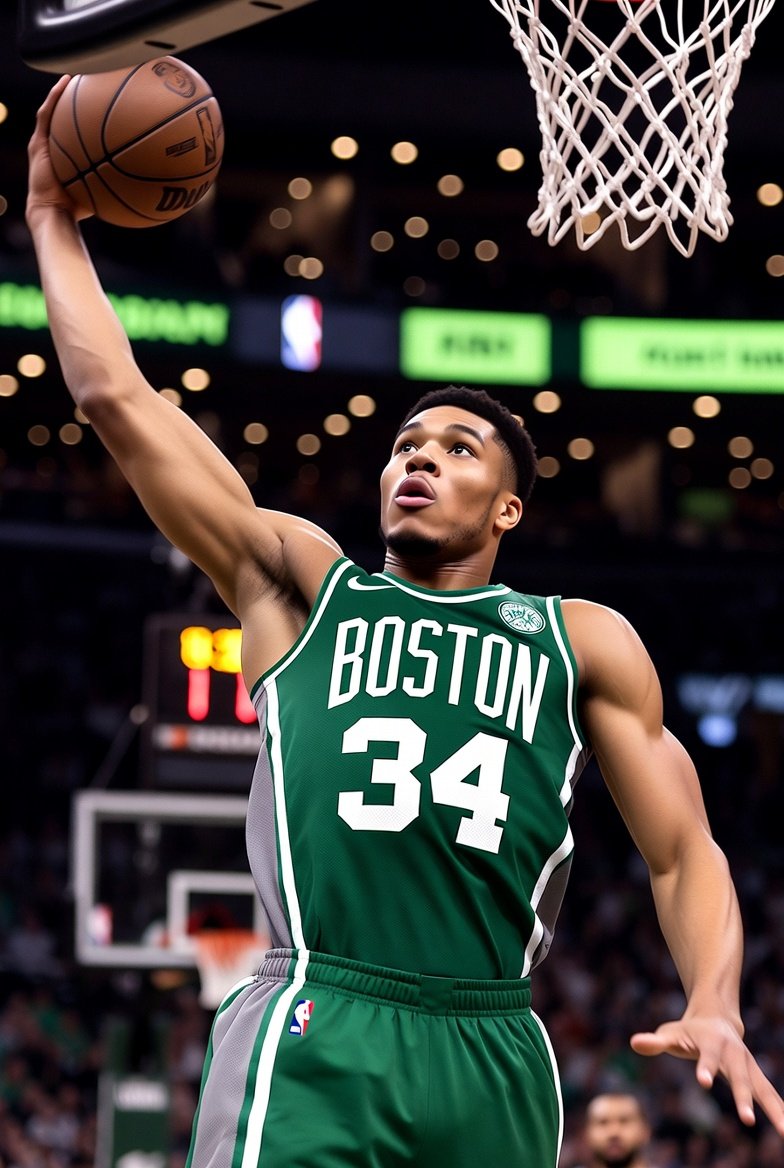
Boston has serious interest and reportedly has Giannis on his preferred destinations list; he has indicated willingness to sign an extension there.
Rumors have centered on a framework involving Jaylen Brown, though Windhorst has repeatedly called trading Brown “a generational decision” given the duo’s recent Finals appearances and championship pedigree with Jayson Tatum.
- Superteam potential vs. tough choices: Pairing Giannis with Tatum (and possibly Brown) creates one of the most physically dominant and versatile cores in NBA history. The Celtics’ depth, shooting, and defensive identity would complement Giannis exceptionally well in transition and half-court sets.
- Cap and apron reality: Boston already operates near the second apron with supermax deals for Tatum and Brown. Trading Brown for Giannis (or involving him in a larger deal) would require significant roster maneuvering but could reset the timeline with a new superstar in his early 30s.
- Front office pressure: Acquiring Giannis signals an all-in approach, but losing Brown (a recent All-NBA level contributor) would be emotionally and competitively seismic for a franchise coming off sustained contention.
On the Court: The Celtics finished second in the East (56-26) in 2025-26. Adding Giannis would make them co-favorites or clear favorites in the conference alongside (or ahead of) a strong Detroit Pistons team.
Giannis’s Durability: The Elephant in the Room
Giannis’s 2025-26 season was derailed by multiple lower-body injuries (calf strains, knee hyperextension/bone bruise, ankle). He has a well-documented history of missing time in the regular season and playoffs in recent years.
However, when healthy, he remains a generational two-way force capable of MVP-level production (~28-30 PPG, 10+ RPG, elite defense and transition play).
Any acquiring team must plan for load management, a top-tier medical/training staff, and realistic expectations that he may miss 15-25 games per season plus potential playoff absences.
The upside: In a Spoelstra or Joe Mazzulla system with strong supporting casts, Giannis can still be the best or second-best player on a championship contender when available.
What It Means for the Eastern Conference and Finals Chances
The East in 2025-26 was already competitive: Detroit Pistons led the way, followed closely by Boston, New York, and Cleveland. The Heat hovered around the play-in line, and the Bucks collapsed.
Adding Giannis to either Miami or Boston creates a new super-contender (or strengthens an existing one). The acquiring team would instantly become a Finals favorite or co-favorite in the East.
- Realistic Finals odds if healthy for the playoffs: 45-65% to reach the NBA Finals in 2026-27 (higher for Boston due to existing infrastructure and depth; slightly lower for Miami due to the assets likely departing). Championship odds would land in the 15-30% range depending on health, supporting cast, and matchup luck — comparable to other top East teams but elevated by Giannis’s peak dominance.
- Broader East ripple effects: The balance of power shifts dramatically. A Giannis-led Heat or Celtics would force the Pistons, Knicks, and Cavaliers to respond aggressively. The Bucks enter a full rebuild. Overall league parity improves in the short term as one more team joins the elite tier.
Windhorst has noted that moving Giannis will change the league’s balance of power, with the acquiring team becoming “on some level a contender.”
What Are the Chances a Deal Actually Happens Soon?
Per the latest from Windhorst and league reporting, the probability of a trade in the immediate window (around the draft) is solid — roughly 55-70%.
Miami has been the most consistent aggressor and appears to have a slight edge in preference from Giannis’s side, but Boston’s assets and willingness to discuss Brown keep them firmly in the mix. The Bucks’ high asking price has complicated talks, and some personnel around the league have described it as unrealistic, but the deadline pressure is real.
A third team could still enter to facilitate salary matching or asset rerouting, especially for a Celtics deal.
My Bottom Line: This is one of the biggest potential moves in recent NBA history. Whether Giannis lands in Miami’s culture-driven ecosystem or Boston’s championship infrastructure, the Eastern Conference will look dramatically different next season. The next 24-48 hours could rewrite the league’s power structure.

Big John
I have an Associates & Bachelors Degree in Criminology with a minor in Political Science. I've been blogging since around 2017, my work has been viewed by over a million people. My works from FinFlam and FinFlam Sports have been talked about on many of the largest news outlets in the world from Reuters, USA Today, Politifact, CheckYourFact.com, The Quint and many other outlets.
You May Also Like

Tom Brady Heading to The Raiders?

Top 3 Dallas Cowboys Quarterbacks in History
