Mark Wahlberg as Pete Rose Is in Real Development
Mark Wahlberg is not teasing a costume. He is saying he will play Pete Rose. The project has a script, more than one draft, conversations with filmmakers, and a window Wahlberg keeps repeating: late-career Charlie Hustle, player-manager, chasing Ty Cobb, then the wreckage after baseball. Production is the next fight. A theater date is not on the board.
Rose died in September 2024 at 83. After that, MLB took him off the permanently ineligible list. The hits record did not move. The argument did. That is the climate this movie is walking into.
What we actually know about Mark Wahlberg as Peter Rose
April 2026: Wahlberg told the Throwbacks podcast the film was in active development. “We’ve got a script.” He described the story as older Pete, back in Cincinnati as player-manager. That is 1984–86 on the field, then manager through 1989, when the ban landed.
Early September 2026, The Rich Eisen Show: he said they had been working on it “quite some time,” there were “various versions of the script,” and they were “hoping to be into production sometime in early ’27.” He said yes, he would play Rose. He also said the preparation would take months, maybe a year, the same way The Fighter took time, and he hoped he would still look believable as Rose at that age — late career, not the 1960s kid running out walks.
This past weekend, at a Paradise Card Breaks sports-card event, he tightened the pitch again: the movie starts when Rose returns to Cincinnati chasing Cobb’s record as player-manager, then follows later life. A fan yelled to put Rose in the Hall of Fame. Wahlberg answered, “We gotta put him in the Hall of Fame, yes!” Local coverage said production could begin later this year. That is earlier than the Eisen “early 2027” line. Treat both as hope, not a call sheet.
What has not been announced: title, studio, director, budget, co-stars, Ohio tax-credit paperwork as a locked shoot, or a release year. Ohio producers have talked tax credits if it films here. That is interest, not a start date.
The story they are telling
This is not a Big Red Machine origin movie. Wahlberg is not trying to play 24-year-old Pete. The spine is the second Cincinnati act: manager’s jacket, hit No. 4,192, the grind to 4,256, then John Dowd, Bart Giamatti, and the exile. He mentioned dealing with the late-career mess and “life after baseball.” That is the banned years, the autograph tents, the Hall of Fame door that stayed shut while he was alive.
If they do it honest, the movie cannot be a highlight tape with a sad epilogue. Rose’s numbers are the easiest part. The hard part is a man who outhit everybody and then bet on the game he managed. Hollywood loves a hustle. Baseball still has not decided if hustle washes out the rest.
Who else could be in it
Nobody is cast except Wahlberg talking about himself. The Cincinnati Enquirer ran a dream sheet in April. It is fan casting, not a deal memo, but it maps the roles the script almost has to fill:
- Paul Giamatti as his father, Commissioner Bart Giamatti
- James Spader as investigator John Dowd
- Oliver Platt as Fay Vincent
- Margo Martindale as Marge Schott
- Mahershala Ali as Eric Davis
- Walton Goggins as Johnny Bench
- Tramell Tillman as Joe Morgan
- Alfred Enoch as Tony Perez
Those names make sense because the late-career movie is a courtroom-and-clubhouse picture, not a rookie montage. If Wahlberg is Pete at 44–48, the supporting cast has to be the men who built the Machine and the men who ended his eligibility. Bench and Morgan as cameos only work if the film flashes back. If it stays 1985–89, they are ghosts in the dugout.
Nobody serious has attached a young-Pete actor. That tells you the movie they want: one man, one era, one collapse.
When would it come out?
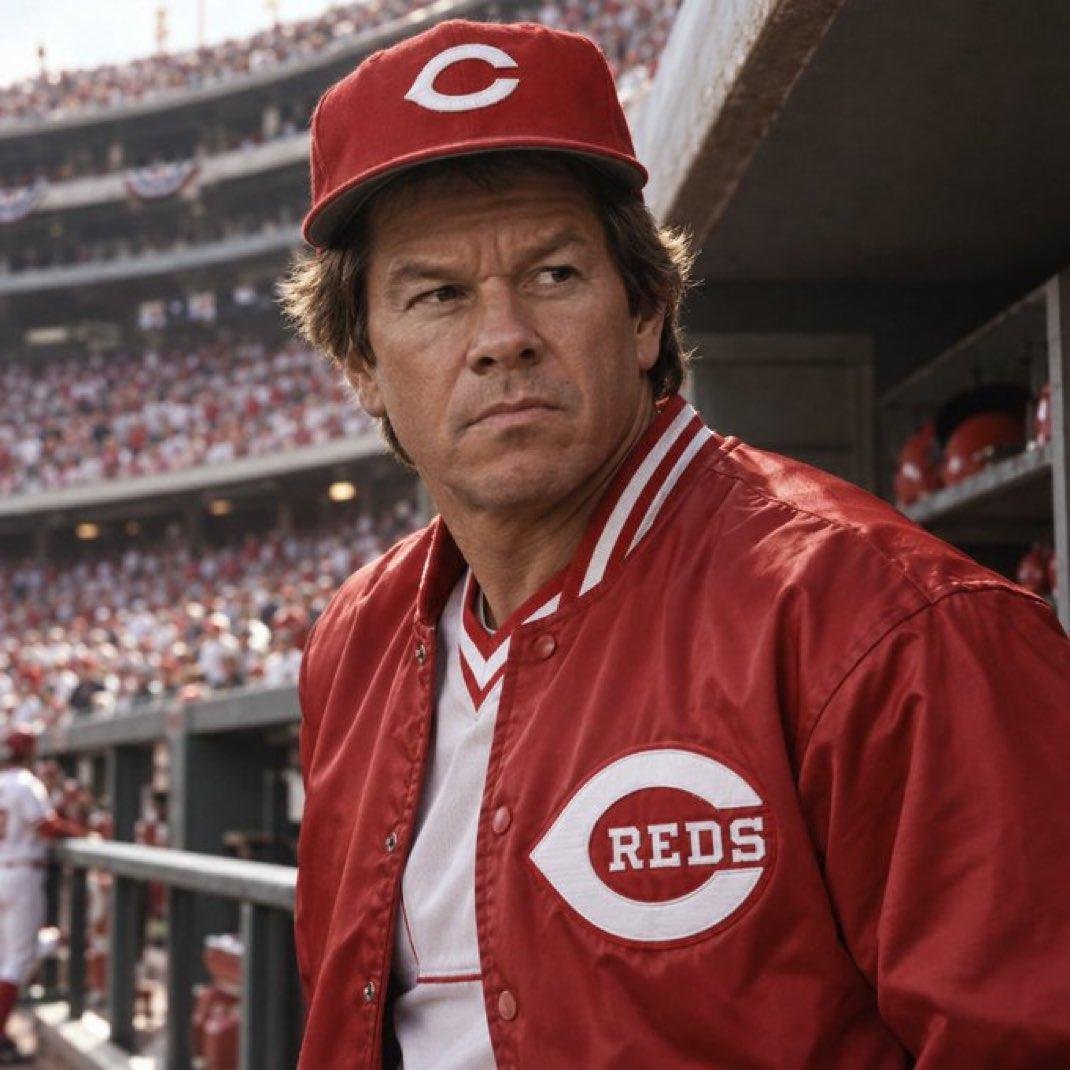
Do the math Hollywood actually uses. Script in 2026. Shoot late 2026 or early 2027 if the Eisen calendar holds. Sports biopics then eat a year in edit, legal, and baseball licensing. Earliest realistic theatrical window is late 2027 or 2028. Anyone selling “this fall” is selling a photo of Wahlberg in a Reds jacket, not a premiere.
Wahlberg is also circling a Belichick biopic he has not even read. That is a scheduling problem. Two heavy sports transformations at once is how one of them slips.
Why now, and not while Rose was alive
Studios did not suddenly discover 4,256 hits. They waited because a living Pete Rose was a legal and political grenade.
While he was alive, MLB’s lifetime ban made official cooperation ugly. You need uniforms, marks, archival footage, and a league that will not sue you for using the product. A banned man is a rights headache. A dead man who has been taken off the ineligible list is a different contract. The estate can sell the life story. The commissioner can stay out of the way. Insurers sleep better.
There is also the defamation problem. Rose spent decades denying, then admitting, then reshaping the betting story. A film that says he bet on the Reds while he is sitting in a Las Vegas shop is a lawsuit waiting on a table. A film that says it after he is gone is history. Ugly history. Still history.
Wahlberg’s age is the other reason. He is in his 50s. Late-career Rose is the version he can play without a mountain of digital de-aging. Young Charlie Hustle needed a different actor ten years ago. Hollywood did not greenlight that actor. They greenlit the tragedy version, because tragedy is easier to sell than 24 seasons of singles.
And the Hall of Fame clock changed. As long as Rose was ineligible, a studio was picking a fight with the institution in Cooperstown. After the posthumous removal from the list, the fight is cultural, not bureaucratic. Wahlberg yelling “put him in” at a card show is the marketing. The movie is the brief. Cooperstown still has to vote. A film will not vote for them. It will make the argument louder.
The honest take
Pete Rose was the hit king and a man baseball banished for betting on baseball, including his own team. Both things are true. A Wahlberg movie that only does the first thing is propaganda. A movie that only does the second is a sermon. The version worth making starts when he comes home to manage, breaks Cobb, and finds out the game will take the hits and keep the punishment.
There is no release date. There is a script, a star who wants the part, and a city that already cast the rest of the clubhouse in its head. That is further than this story has ever gotten. It is not in theaters until somebody actually yells action.

Big John
I have an Associates & Bachelors Degree in Criminology with a minor in Political Science. I've been blogging since around 2017, my work has been viewed by over a million people. My works from FinFlam and FinFlam Sports have been talked about on many of the largest news outlets in the world from Reuters, USA Today, Politifact, CheckYourFact.com, The Quint and many other outlets.


You May Also Like

The Number 1 Problem with Russell Wilson

Ryan Garcia: Tank Rematch Only at 147