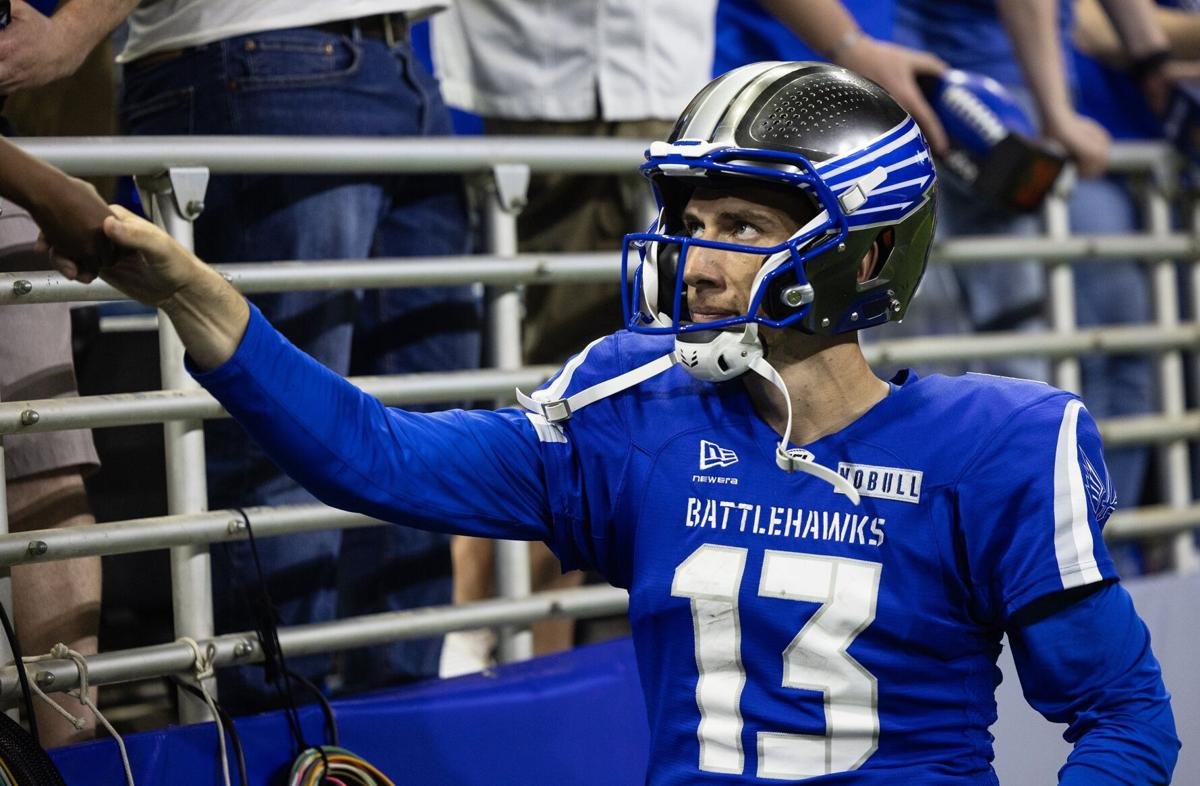
Why the St. Louis Battlehawks Lost in the UFL Semifinals
The St. Louis Battlehawks entered the UFL semifinals with everything they could have asked for. They were playing at home inside The Dome at America’s Center, had one of the league’s most experienced quarterbacks in Luis Perez, and were facing a Louisville Kings team they had already defeated during the regular season.
Yet when the final whistle blew, the Battlehawks were walking off their home field with a disappointing 29-20 loss and their championship dreams shattered.
The St. Louis Battlehawks entered the UFL Semifinals as the No. 2 seed with home-field advantage at The Dome at America’s Center, riding a strong regular-season record and a dominant 16-3 win over the Louisville Kings earlier in the year. Yet on June 7, 2026, the red-hot Kings (who had won four straight) flipped the script, defeating the Battlehawks 29-20 to advance to the United Bowl against the DC Defenders.
This matchup highlighted a tale of two teams: one capitalizing on efficiency and big plays, the other struggling with consistency despite solid individual efforts. Here’s a detailed assessment based on the game stats you shared.
Naturally, fans are asking the same question: Who deserves the blame? The easy answer would be to point fingers at quarterback Luis Perez. After all, quarterbacks often receive too much credit when teams win and too much blame when teams lose.
But looking at the numbers and the flow of the game, Perez should not be at the top of the blame list.
Perez completed 27 of 45 passes for 249 yards and a touchdown. Were those MVP-caliber numbers? No. But they were more than good enough to give St. Louis a chance to win. The offense scored 20 points and actually held a 17-11 halftime lead. The real story unfolded after the break.
The BattleHawks Defense
The biggest culprit in this loss was the Battlehawks’ inability to stop Louisville’s rushing attack.
Louisville’s offense didn’t need to throw the ball all over the field. Quarterback Chris Rogers passed for only 162 yards, but the Kings dominated on the ground. Running back Isiah Wheeler rushed for 89 yards on just seven carries, averaging an eye-popping 12.7 yards per attempt. Jaquez Robinson added 51 yards on seven carries, averaging more than seven yards per carry.
Kings’ running backs (Wheeler especially) gashed the defense for chunk plays. Missed tackles and poor gap integrity allowed Louisville to control the clock and score efficiently. The home defense couldn’t replicate the regular-season dominance (6 sacks in the first meeting).
Simply put, the Battlehawks had no answer for Louisville’s rushing attack.
Championship-caliber teams usually force opponents to become one-dimensional. Instead, St. Louis allowed Louisville to control the game with explosive runs and efficient offense. When a defense gives up chunk plays on the ground, it keeps drives alive, wears down defenders, and opens up opportunities in the passing game.
The BattleHawks Coaching
The second group that deserves criticism is the coaching staff.
At halftime, the Battlehawks appeared to be in control. They had recovered from an early deficit and entered the locker room with momentum. But whatever adjustments Louisville made during the break worked perfectly.
The Kings outscored St. Louis 18-3 in the second half and shut the Battlehawks out completely in the fourth quarter.
Failing to establish the run consistently or adjust to Louisville’s hot streak. The Battlehawks had opportunities (home crowd, prior win) but couldn’t close out drives or stop the Kings’ momentum shifts.
That kind of turnaround is difficult to ignore.
Great coaching staffs make adjustments when games tighten up. In this semifinal matchup, Louisville appeared to make the better adjustments while St. Louis struggled to respond. Whether it was defensive alignments, offensive play-calling, or in-game strategy, the Battlehawks were outplayed and outcoached when it mattered most.
The BattleHawks Offense
The offensive playmakers also deserve some responsibility.
Twenty points is not a terrible output, but it isn’t usually enough to win a playoff game at home. The Battlehawks needed more explosive plays from their receiving corps and running game, particularly in the second half. Too many drives stalled, and the offense failed to deliver when the season was on the line.Still, placing this loss entirely on the offense would be unfair.When a team blows a halftime lead, gets dominated on the ground, and fails to score in the fourth quarter, the responsibility belongs to multiple areas of the organization.
Offensive Line / Pass Protection was garbage, Perez was sacked or hurried, leading to a lower YPA (5.5) despite 45 attempts. The pocket collapsed too often against a Kings front that controlled the line of scrimmage.
If I’m assigning percentages of blame, the breakdown looks something like this
Run Defense: 40%
Coaching and Halftime Adjustments: 30%
Offensive Playmakers: 20%
Luis Perez: 10%
The reality is that championship opportunities don’t come around often. The Battlehawks had home-field advantage, a passionate crowd behind them, and a path to the title game. Instead, Louisville came into The Dome and left with the victory.
This isn’t about one player—it’s a team loss where the Kings simply executed better in a high-stakes environment. Louisville’s recent form (4-0 streak entering playoffs) proved decisive against a Battlehawks squad that was 2-2 in their final stretch
For Battlehawks fans, that’s what makes this loss so painful. It wasn’t just a defeat. It was a missed opportunity.
Now the focus shifts to the offseason, where St. Louis must figure out why a promising season ended one game short of the championship and what changes are needed to make sure history doesn’t repeat itself.
e

Big John
I have an Associates & Bachelors Degree in Criminology with a minor in Political Science. I've been blogging since around 2017, my work has been viewed by over a million people. My works from FinFlam and FinFlam Sports have been talked about on many of the largest news outlets in the world from Reuters, USA Today, Politifact, CheckYourFact.com, The Quint and many other outlets.
You May Also Like
The Top Five Greatest Lakers Players Ever

COVID-19 & The NFL Playoff Bubble?